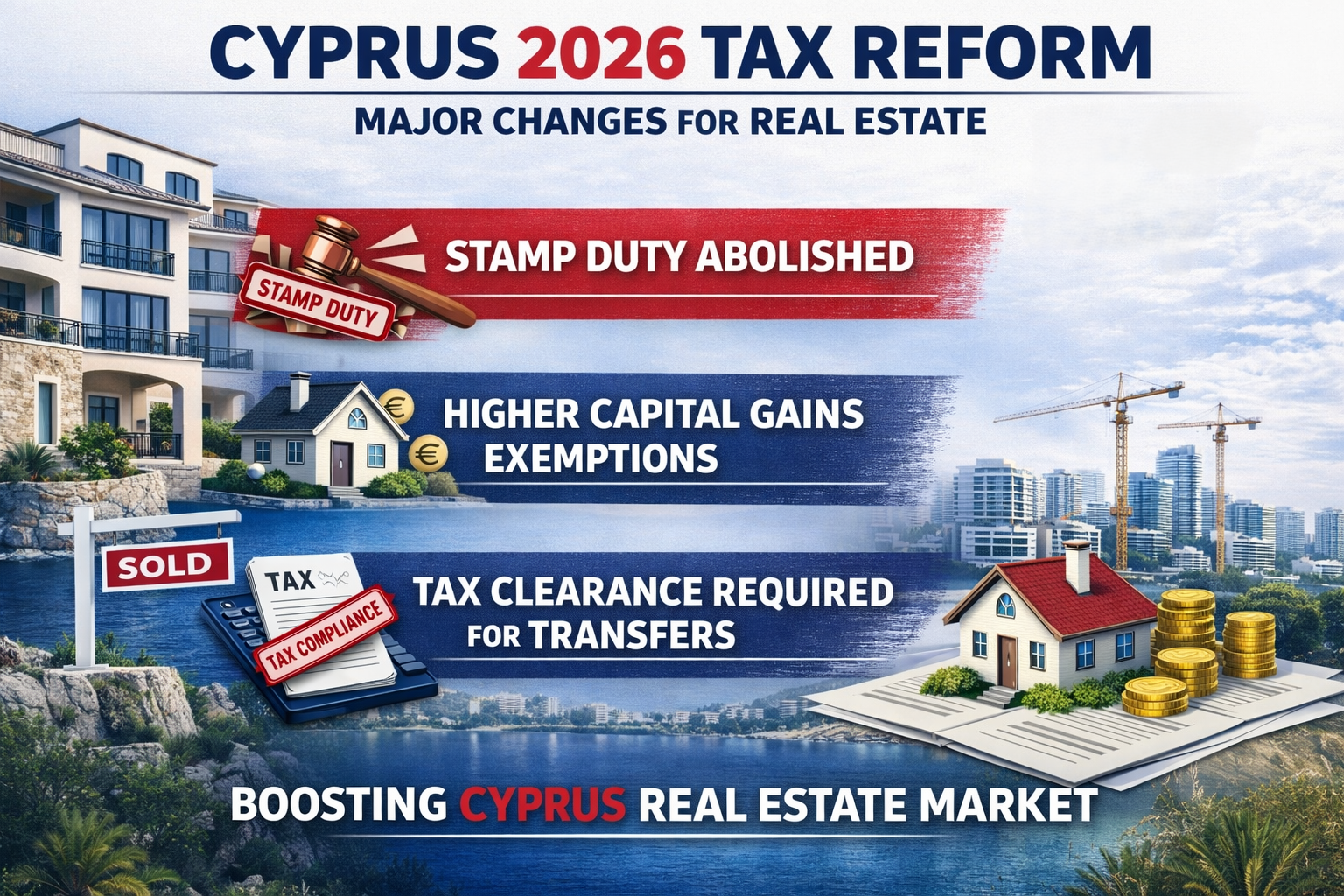

In late December 2025, the Cyprus Parliament approved a comprehensive tax reform package — the most significant overhaul of the country’s tax code in more than two decades — which came into effect on 1 January 2026. The changes introduce new rules and incentives that directly impact the local real-estate market, including transaction costs, capital gains tax, income tax, and property transfer conditions, along with broader fiscal incentives for homeowners and investors.
Stamp Duty Abolished on Most Transactions
One of the most impactful reforms for property buyers and investors is the complete abolition of stamp duty on property transactions, including contracts and share transfers, under the new law effective from 1 January 2026. This removal eliminates a long-standing transactional cost that previously added several thousand euros to conveyancing, significantly lowering upfront purchase costs and improving market accessibility.
Important nuance: Contracts signed before 31 December 2025 but only stamped or brought into Cyprus after 1 January 2026 may still attract historic stamp duty under the old regime.
Enhanced Capital Gains Tax (CGT) Rules
The reform introduces a number of substantial changes to Capital Gains Tax as it applies to real estate:
- Increased lifetime CGT exemptions: The lifetime exemption for property disposals has been raised across categories — including €150,000 for primary residences (up from €85,430), with general exemption levels also increased (e.g., from around €17,000 to €30,000) and agricultural land exemptions similarly boosted.
- Expanded CGT scope: The threshold for treating a company share disposal as “immovable property” has been lowered from 50 % to 20 % of its value linked to Cyprus real estate, meaning more indirect share-based disposals are now subject to CGT.
- Property swap/Antiparochi exemption: Under the revised rules, land-for-apartment exchanges — traditional “antiparochi” arrangements — can qualify for full CGT exemption provided the new property is completed within a defined timeframe (generally five years).
These updates reduce the effective tax burden for many sellers and investors while encouraging long-term holding and structured development strategies.
Tax Compliance Linked to Property Transfers
Under the new regime, the Tax Commissioner gains authority to withhold consent for immovable property registration or transfer unless all required tax compliance obligations have been fulfilled. This elevates tax clearance to a critical precondition for conveyancing, tightening enforcement and reducing disputes.
Broader Tax Reforms That Affect Property Owners
The 2026 reform package also includes several other tax changes with clear implications for property investors and residents:
- Income Tax Changes: The personal income tax-free threshold rises from €19,500 to €22,000, with revised progressive bands up to 35 % on higher income.
- Special Defence Contribution (SDC) reductions: SDC on rental income is abolished — a major benefit for landlords — while SDC on dividends for tax-resident individuals falls significantly (e.g., from 17 % to 5 %).
- Corporate Tax and Incentives: The corporate tax rate increases from 12.5 % to 15 %, with extended loss carry-forwards and enhanced deductions for R&D and entertainment expenses.
- Compliance Enhancements: Mandatory tax return filing applies to most adults, and stronger enforcement powers are granted to tax authorities, including requirements for electronic rent payments and penalties for non-compliance.
Market Impact and Outlook
Real-estate professionals are broadly welcoming the reforms as a strong signal of confidence in the Cyprus property market and a clear move toward long-term growth. The abolition of stamp duty and the reduction of other transaction costs are expected to boost demand among domestic and international buyers, while higher CGT exemptions — particularly for primary residences — are seen as supportive of household mobility and portfolio recycling.
At the same time, the expansion of CGT rules to include indirect property holdings underscores the growing importance of strategic tax planning for investors and developers when structuring transactions or holding property via corporate vehicles.
Taken together, these reforms represent a decisive step toward modernising Cyprus’s tax framework, strengthening transparency, and reinforcing the country’s competitiveness as a property investment destination.
For tailored guidance on how these changes could affect your investments, buyers, or development plans, we encourage you to contact KPRealty for professional advice and in-depth market insight. Our team is ready to help you navigate the evolving landscape with confidence.