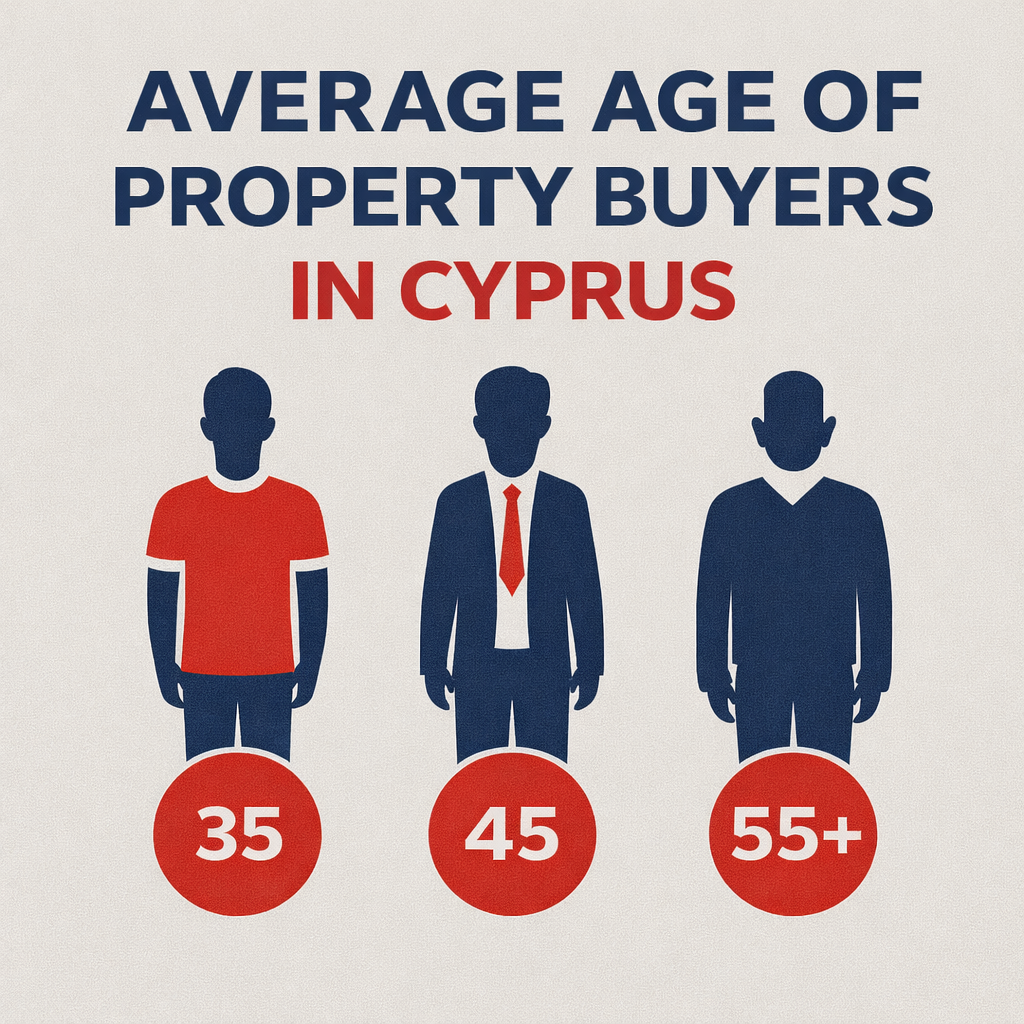

The Cyprus real estate market is undergoing a meaningful demographic shift. One of the most notable changes in recent years is the increase in the average age of property buyers, a trend that reflects broader economic, social, and structural developments across the island.
Whereas homeownership in Cyprus was once dominated by buyers aged 25 to 35, the average buyer age has now moved closer to 40 years old. This evolution highlights changing affordability dynamics, shifting lifestyle priorities, and a more investment-driven property landscape.
For buyers, sellers, and investors alike, understanding this shift is essential for navigating the modern Cyprus property market.
From First-Time Buyers to Financially Established Purchasers
Historically, younger buyers entered the market earlier, often purchasing family homes shortly after marriage or early in their careers. Today, this pattern has changed.
The modern buyer in Cyprus is more likely to be:
- Financially established
- Professionally settled
- Focused on long-term stability rather than early ownership
This trend confirms that the average buyers are much more deliberate and informed in their decision-making. Rather than purchasing out of necessity, today’s buyers are often purchasing strategically whether for family planning, asset preservation, or investment diversification.
Key Factors Influencing Buyer Decisions
1. Location and Daily Practicality
As buyer age increases, practical lifestyle considerations carry greater weight. Proximity to:
- Employment hubs
- Kindergartens and schools
- Established infrastructure
have become a decisive factor, particularly for buyers with families or long-term residency plans. This has reinforced demand in well-connected urban and suburban areas rather than speculative or undeveloped locations.
2. Apartments Leading Demand Growth
One of the most significant structural shifts in the Cyprus property market is the growing preference for apartments over houses.
Over the past year alone, demand for apartments has increased by at least 20%, while prices have remained relatively stable. In some cases, modest price corrections of 1–2% have been recorded over recent quarters.
This preference is driven by:
- Lower maintenance requirements
- More predictable pricing
- Strong rental demand
- Easier resale liquidity
For mature buyers, apartments offer a balanced combination of lifestyle convenience and investment security.
3. Housing Prices and Regional Variations
Property pricing continues to vary significantly by location:
- Nicosia (Engomi):
A new two-bedroom apartment (approx. 100m²) is priced around €300,000, with suburban options ranging between €230,000–€240,000. Demand in Nicosia remains largely end-user driven, supported by steady local employment and educational institutions - Limassol (Agios Athanasios):
Prices are notably higher, often reaching €500,000, though select properties may be found closer to €350,000. he city’s international appeal, strong rental yields, and corporate presence continue to sustain premium pricing. - Famagusta:
This area is increasingly recognised as one of Cyprus’s emerging residential markets, offering a rare combination of affordability, lifestyle quality, and long-term upside. With average apartment prices starting from approximately €150,000, the region presents one of the lowest entry points on the island. Beyond pricing, Famagusta benefits from a calmer pace of life, proximity to some of Cyprus’ most unspoilt beaches, and growing interest from buyers seeking value outside the more saturated urban centres. As infrastructure and residential demand continue to develop steadily, Famagusta is positioning itself as a quiet but compelling alternative for both owner-occupiers and forward-looking investors. - Larnaca:
Offers a more balanced price-to-value proposition. Average apartment prices are currently around €220,000, making the city particularly attractive to buyers seeking affordability without sacrificing access to infrastructure, the international airport, and ongoing urban development. - Houses:
While interest remains, demand is more restrained due to limited availability of high-quality stock and consistently high pricing. Largely due to limited availability of high-quality housing stock and consistently high pricing, which places standalone homes beyond the reach of many buyers
These figures (from 2025) reinforce why financial maturity is increasingly a prerequisite for market entry.
Why Younger Buyers Are Participating Less
The rise in average buyer age does not directly indicate reduced interest among younger demographics, it reflects structural barriers.
Younger buyers face:
- Higher deposit requirements
- Rising living costs
- Tighter mortgage affordability assessments
As a result, many delay homeownership until their late 30s or early 40s, when income stability and capital accumulation are stronger.
This delay is not unique to Cyprus; it mirrors trends observed across many European property markets.
What This Shift Means for the Cyprus Property Market
Increased Market Stability
Older buyers typically make more cautious, long-term purchasing decisions. Their presence contributes to:
- Reduced speculative volatility
- Stronger construction standards
- More sustainable pricing behaviour
This demographic shift supports long-term market resilience, particularly during periods of economic uncertainty.
The Importance of Balanced Development
While a mature buyer base strengthens stability, maintaining accessibility for younger buyers remains essential.
For Cyprus to sustain healthy economic growth, a balance must be preserved between:
- High-end developments
- Mid-market and affordable housing
Encouraging diverse housing options ensures inclusivity, workforce retention, and generational continuity in property ownership.
A Market That Reflects Maturity and Intent
The increase in the average age of property buyers in Cyprus is a clear signal of a maturing real estate market, one that increasingly prioritises financial security, lifestyle quality, and long-term value.
For buyers, it reinforces the importance of informed planning.
For sellers, it underscores the value of presenting properties in a way that aligns with mature decision-making.
For investors, it highlights a market driven less by speculation and more by fundamentals.
At KPRealty, understanding these demographic and structural shifts allows us to guide clients with clarity, precision, and confidence, ensuring decisions are aligned not only with today’s market, but with where the Cyprus property landscape is heading.